History
The watermills were operated by the power of water. At a point higher than the mill, a bund was made where the water was collected and flowed towards the mill. From the mill pipe the water entered the turbine, which was made of wood or more commonly of tin like the one in our village with a slanting draw from which the water fell with great force. At the end of the turbine there was a siphon, a narrow hole, so that the water would fall with pressure on the mill’s impeller. The size of the hole was regulated thanks to special metal frames, so that the pressure could be adjusted according to the amount of water falling. The water fell with force on the impeller, which was about 1.5 m in diameter. A metal shaft connected the impeller to the upper millstone, which rotated, while the lower millstone remained still. The millstones were made of granite or other hard stone and were approximately 1,10 to 1,30 m in diameter. The cross or hoist was a mill component which was used to raise or lower the upper millstone so that the grinding would be coarse or fine, depending on the use for which it was intended: fine flour for bread, coarse flour for boulourogouri (groats) or trahanas. Above the millstone was a bowl on which the grain to be ground was thrown. The flour fell into the flour pan, which was placed in front of the millstones. From there the miller would scoop it into the sacks with a shovel. The watermill could grind up to 1,200 ounces (about 1.5 kg) of wheat per 12-hour period. Depending on the volume of grain, the miller had to work day and night.
Μill location
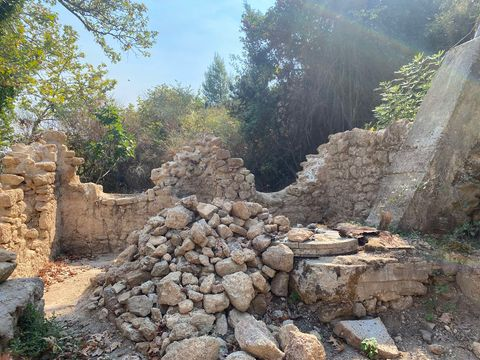
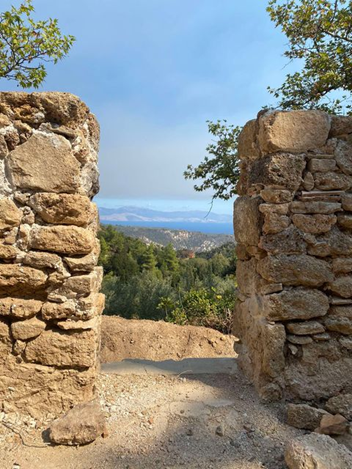
This particular watermill is located in the location of Mylos, a place name due to the presence of the watermill, and we do not know the exact date of its construction. It operated at least from the 19th century until the 1960s. The last miller was Papa Vassilis Panagou (Lambrakis) who slept in a small room next to the mill. Unfortunately the mill was destroyed in the great fire of 1990 and then it was left to its fate and slowly collapsed, a large part of it. Only a small part of the building and its drum survive. It is planned to reconstruct it in the coming years and to use it for educational purposes.
The information was derived from the book “Kryoneri (Matsani) Korinthia History and Daily Life” written by George V. Nikolaou
Watermill restoration
The idea to restore the watermill began in 2005, approximately 25 years after its destruction by fire in 1990, on the initiative of local authorities in Kryoneri.
This first attempt was supported by the then mayor of Sikyonia, Papangelopoulos (2003-2006), who commissioned the National Technical University of Athens to conduct a study on the restoration of the mill, with the aim of including it in the European agrotourism development program LEADER of ANBOPE (AN.BO.PE. S.A. Development of Northern Peloponnese). This effort was not completed, as there was a change in the municipal authority.
In April 2024, a second attempt was made by the local community to utilize the mill. As part of European educational programs, a group of young volunteers from the European Solidarity Corps, who have been serving for several years in Kryoneri under the responsibility of the FILOXENIA association, Intercultural-Environmental Organization, carried out an intervention at the mill, clearing the ruins that had been covered over the years by wild vegetation and removing the rubble from the courtyard.
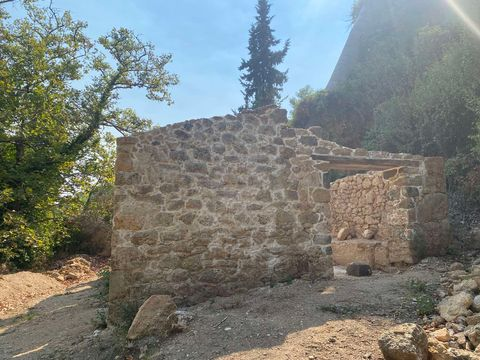
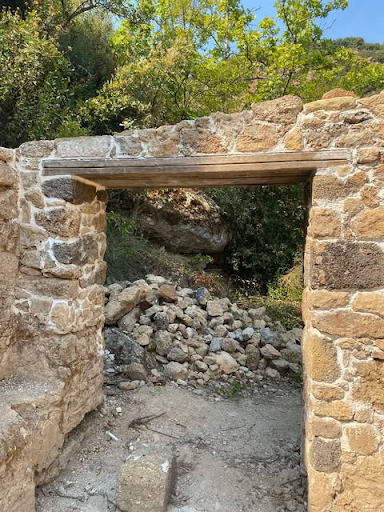
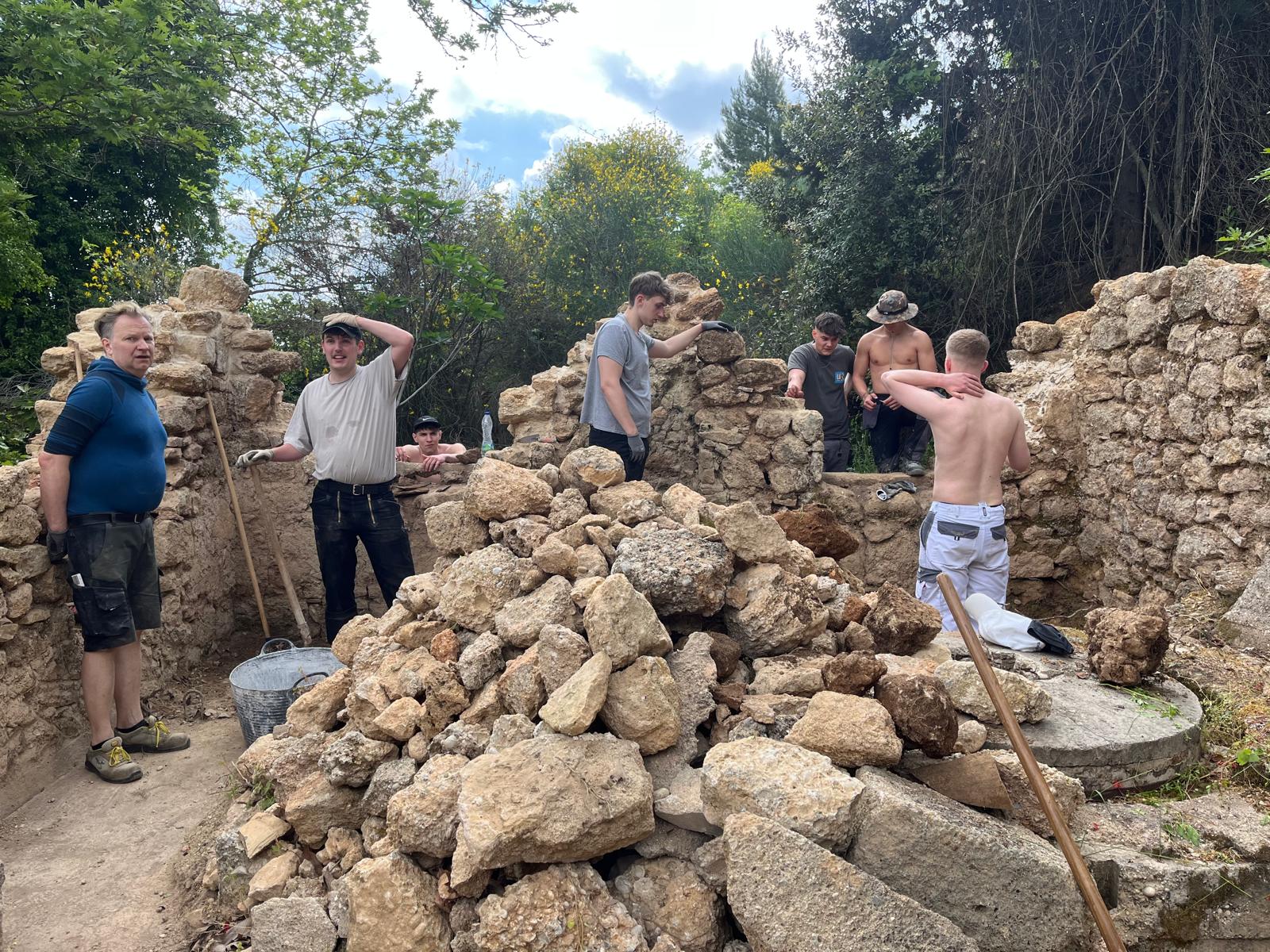
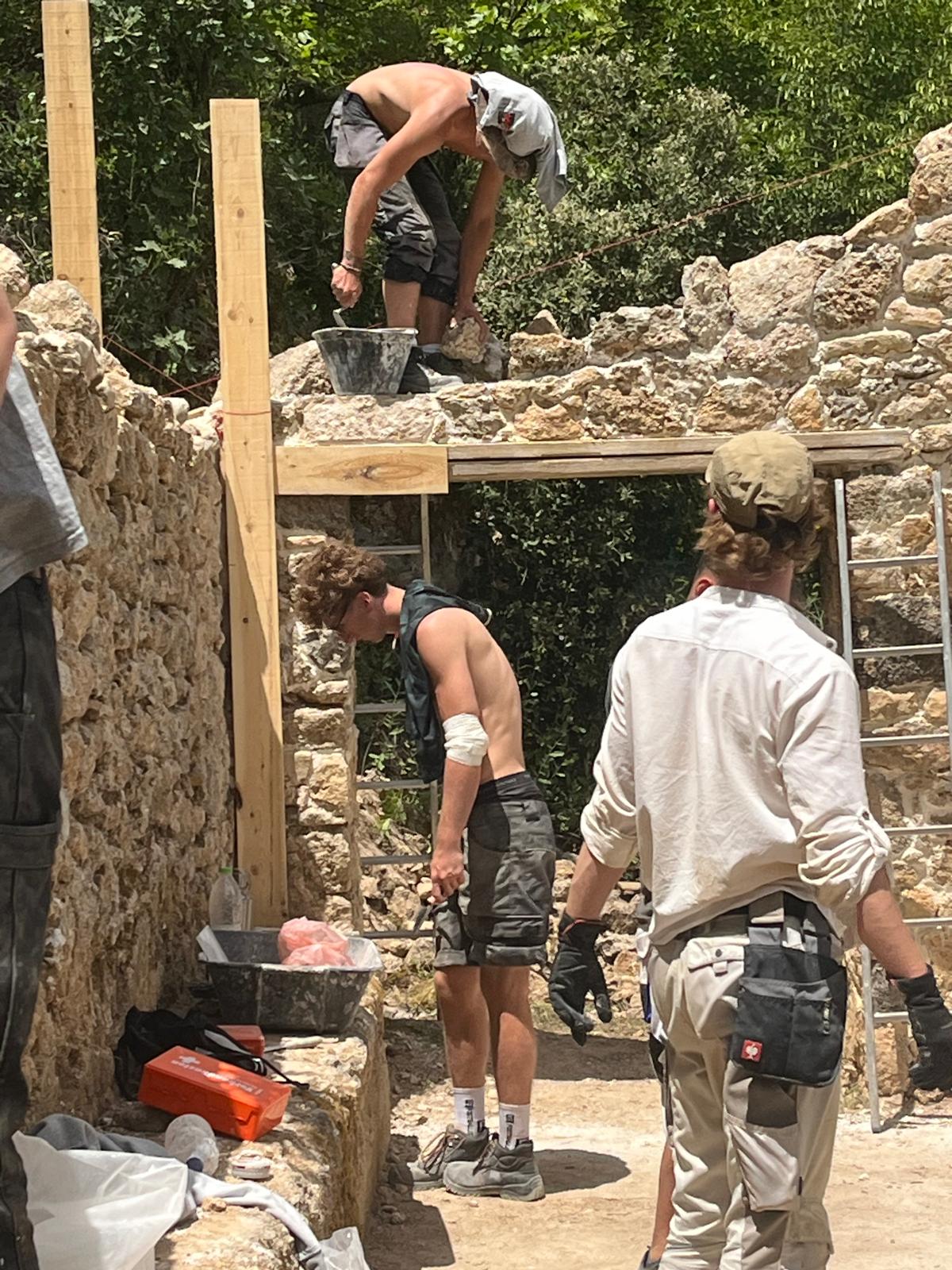
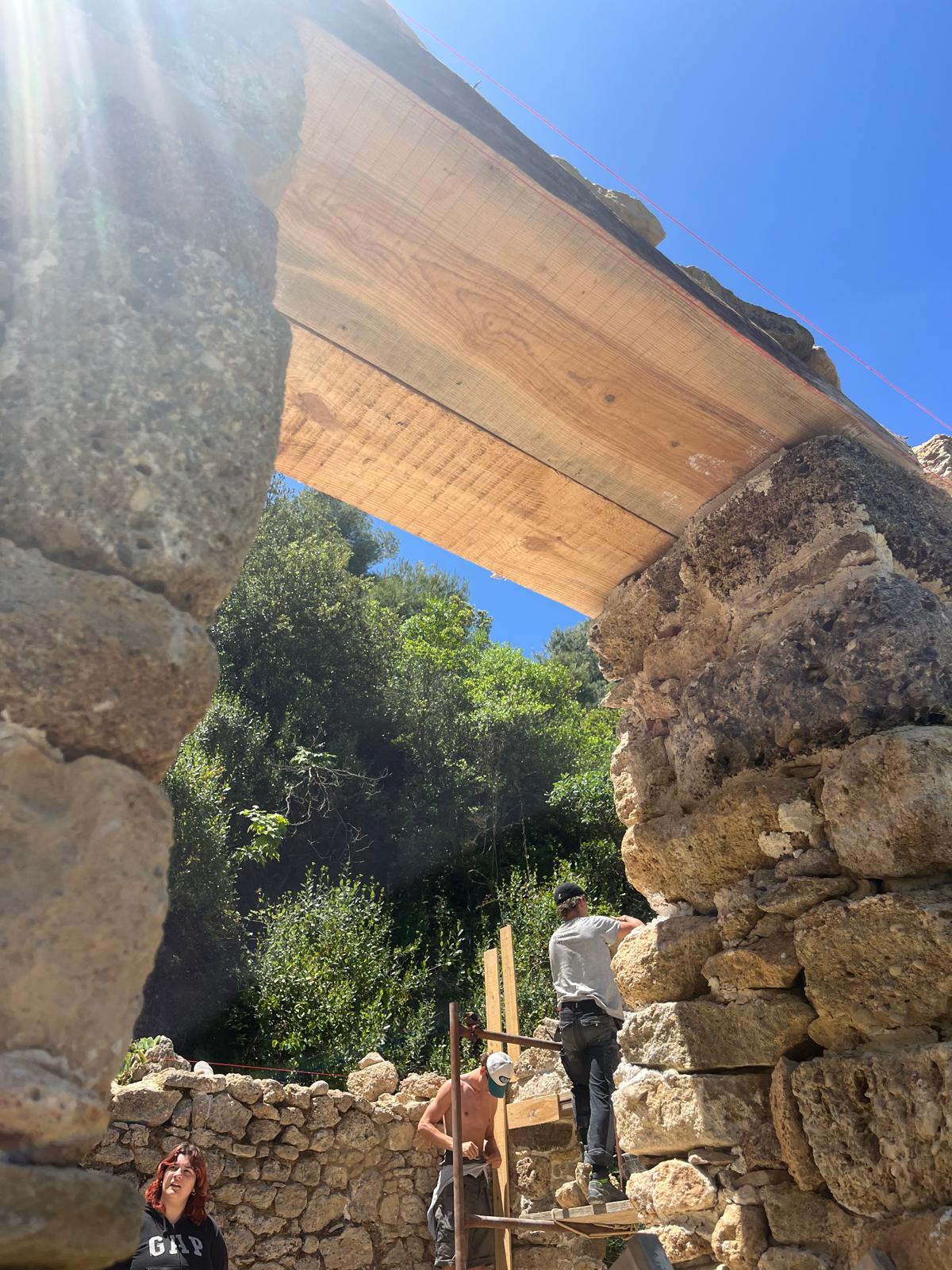
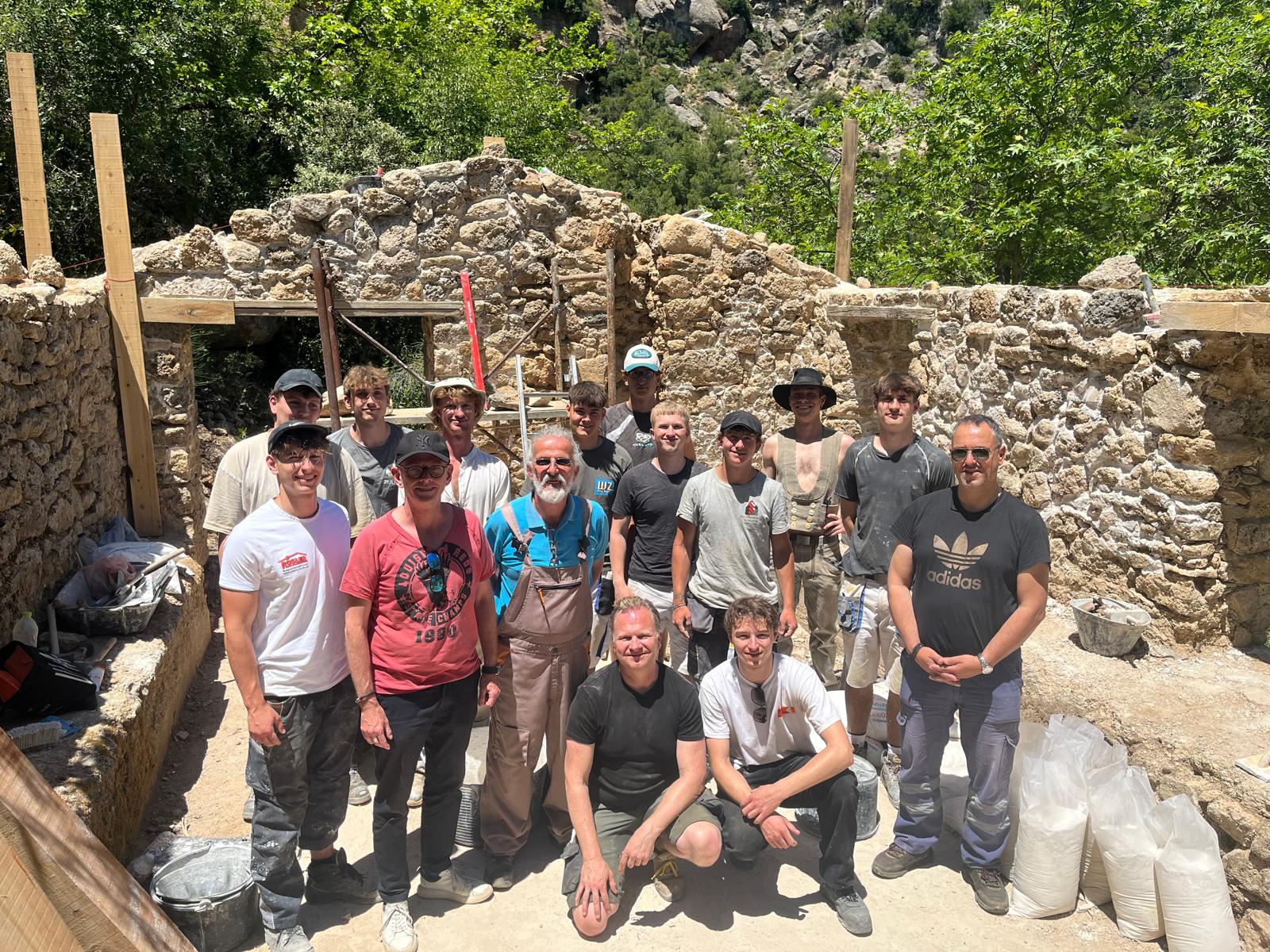
In May 2024, an exchange program was implemented by the Greek-German Youth Foundation (EGIN) with technical high school students from Berlin from the Bildungsverein Bautechnik and the EPAL Kiato, under the supervision of accompanying teachers, where the mill was cleaned internally of fallen stones and soil from the collapsed walls, as well as wood from the burnt roof. The original river stones were cleaned of soil and carefully gathered next to the mill, and the original floor was uncovered. Then, the walls that were still standing were reinforced using traditional techniques, with lots of lime and just a little cement. After three weeks of work, the walls of the building were restored to a height of approximately two meters, and two of the four windows and the central entrance were reinforced with wooden beams.
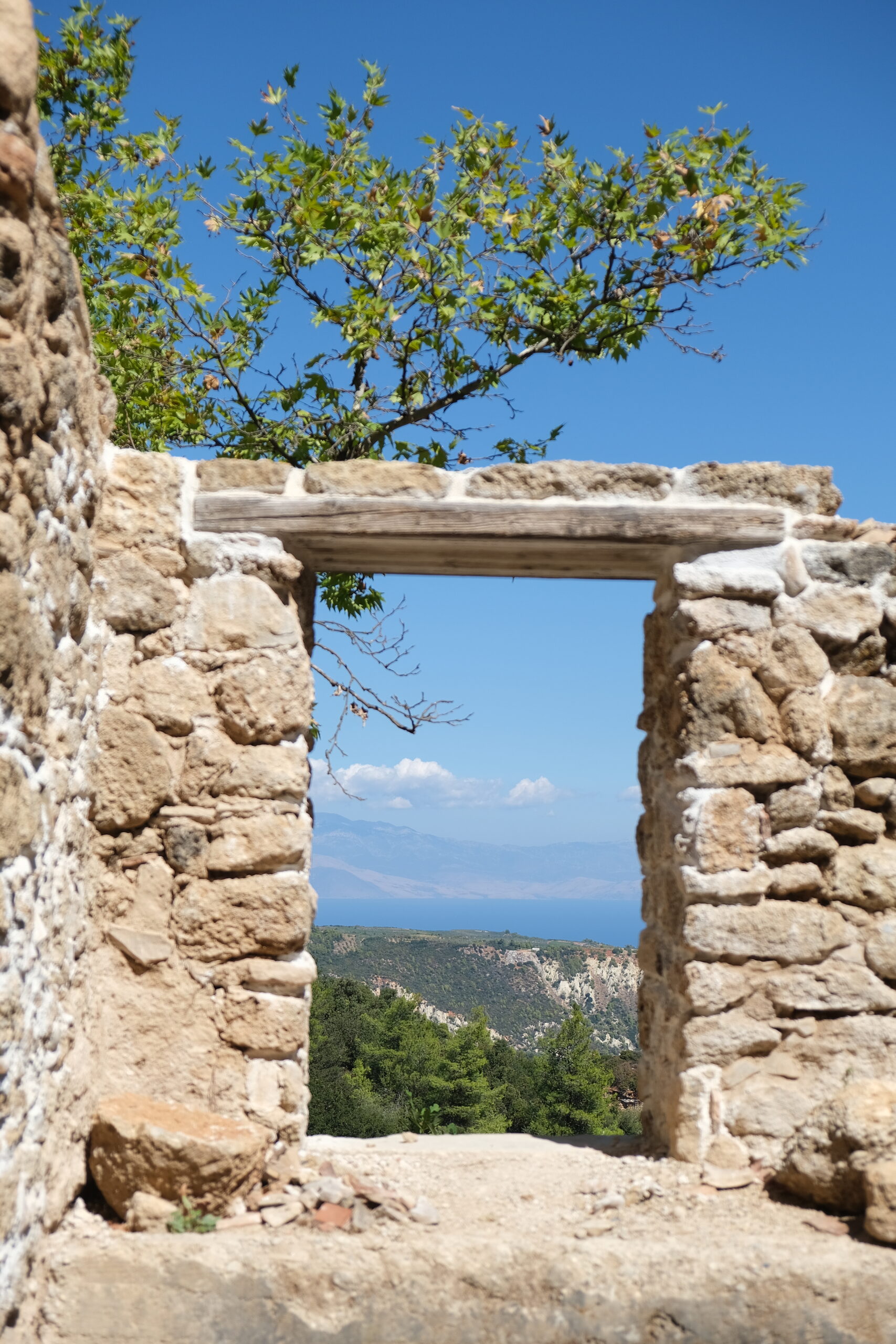
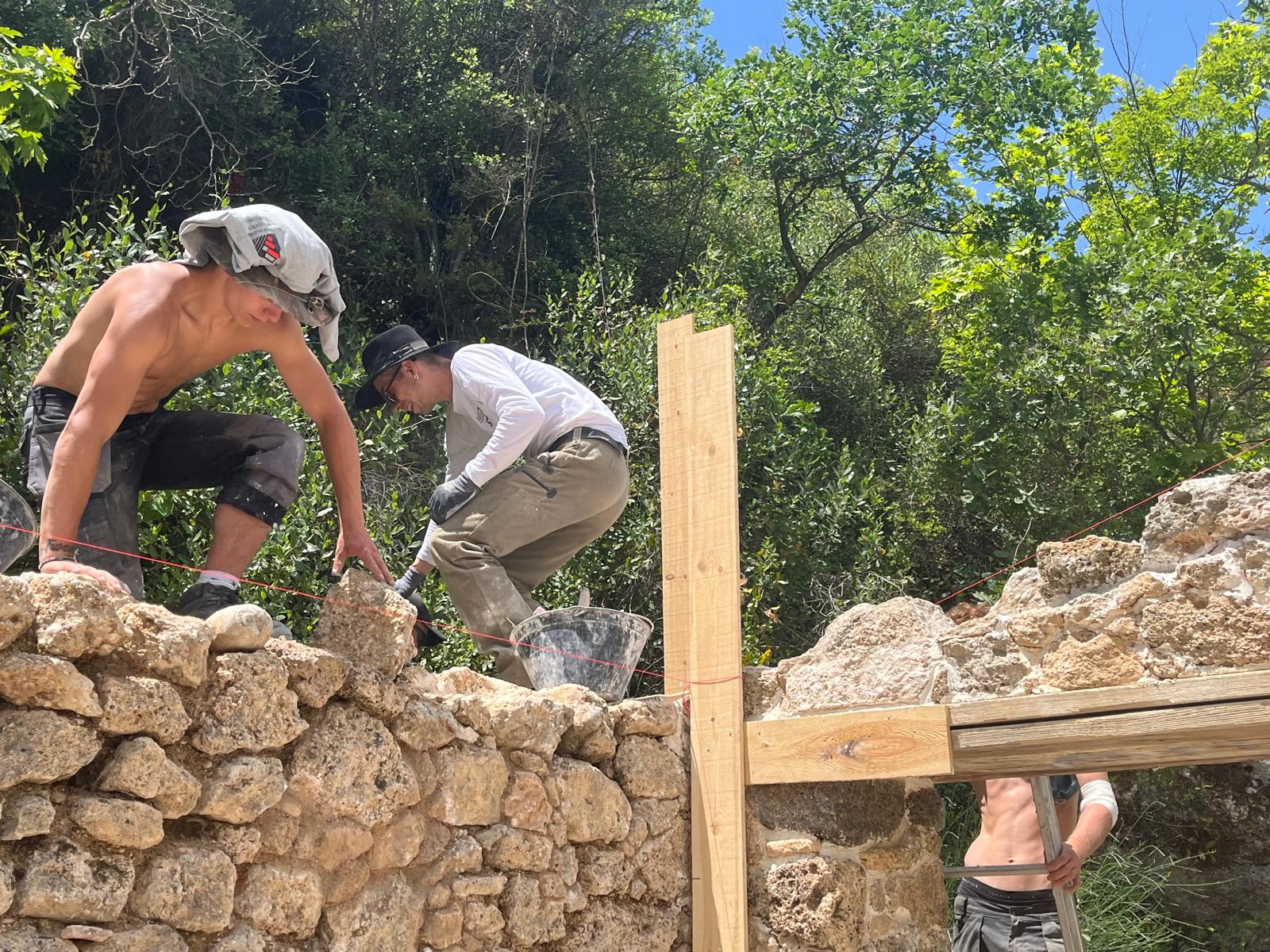
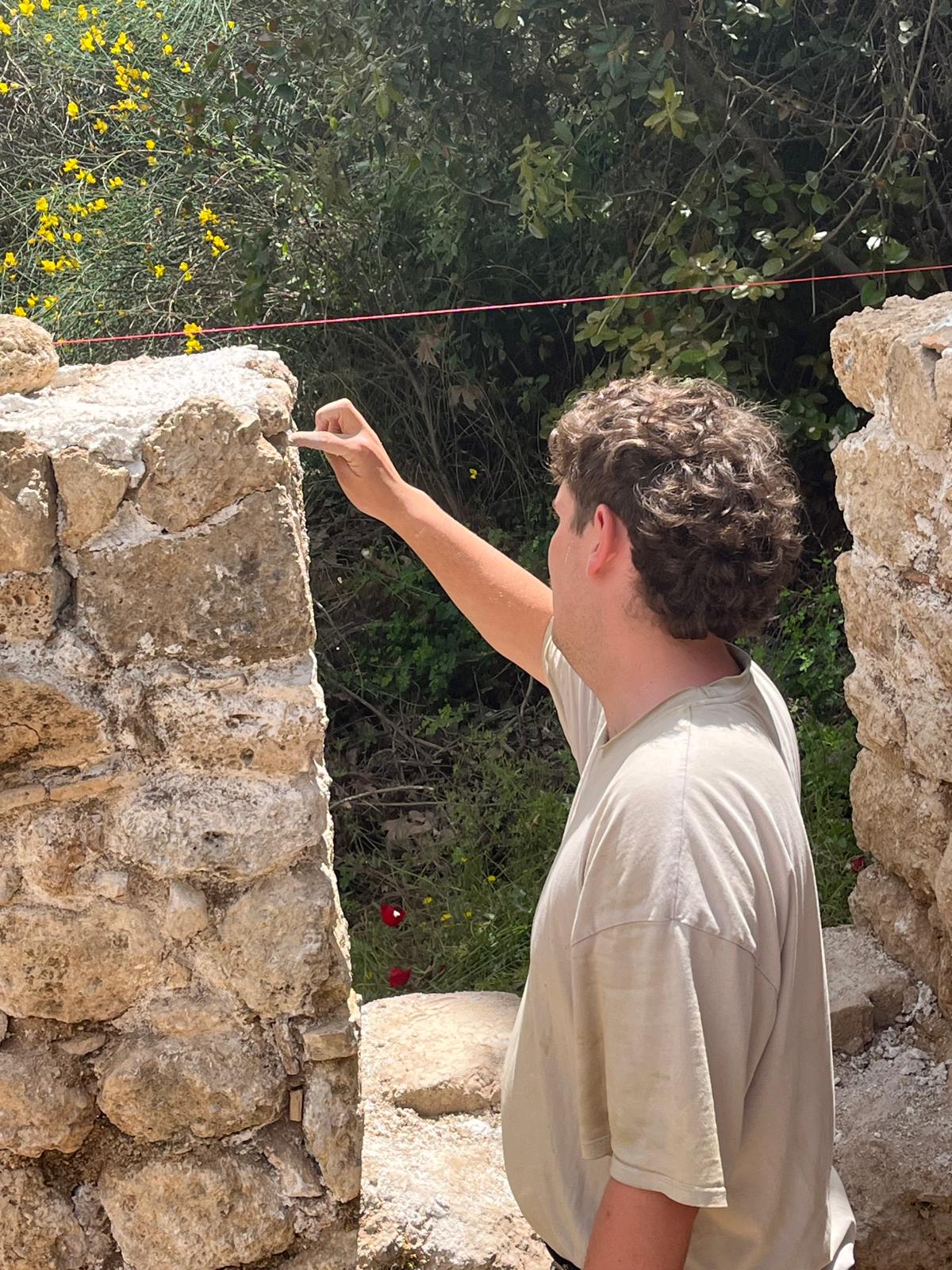
In May 2025, another exchange program was implemented by the Greek-German Youth Foundation (EGIN) with the participation of students from the Bildungsverein Bautechnik, the Knobelldorff-Schule OSZ-Bautechnik from Berlin, and EPAL Kiato, which lasted three weeks. During this phase, the restoration of the walls with lintels on the remaining windows and traditional senaz around the perimeter of the wall was completed. The old stones that were missing from the walls were replaced with donations of old stones from the village ruins, which were offered free of charge by the families of Georgios Nikolaou and Sofia Marini. All the materials were carried by hand by the trainees, as there is no access for vehicles to the mill. The advice of craftsmen and residents of Kryoneri was invaluable for this project.
In February 2026, as part of the special expert program of the Greek-German Youth Foundation (EGIN) in Berlin, the Secretary General of the Ministry of Social Cohesion and Family, Mr. Gloumis – Atsalakis, responsible for the Greek-German Youth Foundation, attended the special expert program of the Greek-German Youth Foundation (EGIN) in Berlin. After being informed about the youth exchanges taking place in Kryoneri regarding the watermill, he expressed interest in visiting the project in May 2026, when a three-week exchange program for technical high school students from Berlin and Kiato will take place again.
The newly established Association of Kryoneri Organizations, in collaboration with the Local Quality Agreement of Northern Peloponnese, supports the completion of the mill’s restoration in close cooperation with the local community.